Digital Marketing: A Complete Guide to Growing Your Business Online
In today’s digital-first world, having a strong online presence is no longer optional for businesses. Whether you run a small local business, an e-commerce store, a startup, or a large company, digital marketing can help you reach potential customers, build your brand, and generate sales.
But what exactly is digital marketing, and how can businesses use it effectively?
What Is Digital Marketing?
Digital marketing refers to promoting products, services, or brands through digital channels such as search engines, social media, websites, email, and online advertising.
Unlike traditional marketing, digital marketing allows businesses to reach specific audiences, measure campaign performance, and adjust their strategies based on data.
Some of the most common digital marketing channels include:
- Search Engine Optimization (SEO)
- Social Media Marketing
- Content Marketing
- Pay-Per-Click (PPC) Advertising
- Email Marketing
- Influencer Marketing
- Affiliate Marketing
- Online Reputation Management
Why Is Digital Marketing Important?
Consumers increasingly use the internet to discover businesses, research products, compare prices, and make purchasing decisions.
A well-planned digital marketing strategy can help a business:
- Reach a larger audience
- Increase brand awareness
- Generate leads
- Drive website traffic
- Build relationships with customers
- Increase online sales
- Measure marketing performance
- Understand customer behavior
One of the biggest advantages of digital marketing is its measurability. Businesses can track metrics such as website visits, engagement, leads, conversions, and advertising performance.
1. Search Engine Optimization (SEO)
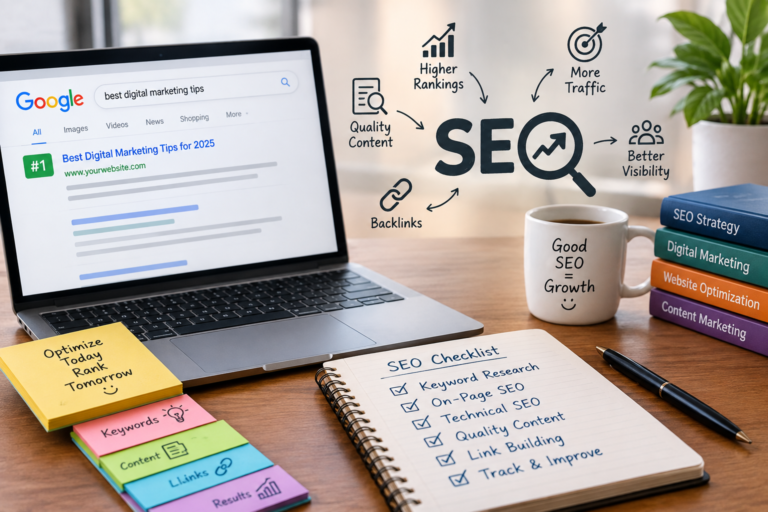
SEO is the process of improving a website so that it can appear more prominently in search engine results for relevant searches.
For example, if someone searches for “best digital marketing agency,” businesses that have optimized their websites may have an opportunity to appear in the search results.
SEO generally involves areas such as:
- Keyword research
- High-quality content
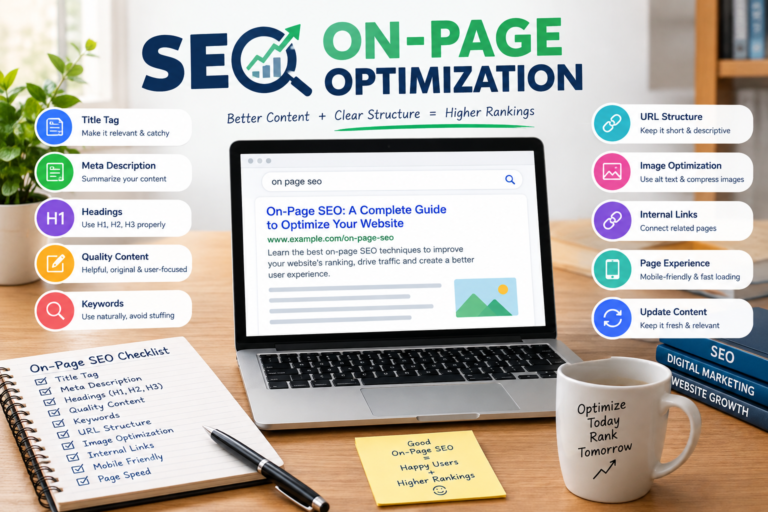
- On-page optimization
- Technical SEO
- Website speed and usability
- Internal linking
- Earning relevant backlinks
SEO is usually a long-term strategy. Instead of relying entirely on paid advertisements, businesses can work toward building sustainable organic visibility.
2. Social Media Marketing
Social media platforms provide businesses with opportunities to connect directly with their audiences.
A social media strategy might include educational posts, short-form videos, customer stories, product demonstrations, behind-the-scenes content, and promotional campaigns.
The key is to create content that provides value rather than simply posting advertisements.
Different platforms can attract different audiences, so businesses should choose channels that make sense for their customers and objectives.

3. Content Marketing
Content marketing focuses on creating useful and relevant content that attracts and engages a target audience.
Examples include:
- Blog posts
- Videos
- Infographics
- Case studies
- E-books
- Podcasts
- Guides
- Newsletters
For example, a fitness company could publish articles about workout routines and nutrition tips. A software company could create tutorials that help customers solve common problems.
Good content can help establish credibility while also supporting SEO and lead-generation efforts.
4. Pay-Per-Click Advertising
Pay-per-click advertising allows businesses to pay for advertisements that appear on search engines, websites, or social platforms.
Unlike SEO, paid advertising can provide visibility relatively quickly. However, businesses need to manage budgets, targeting, creative content, and conversion rates carefully.
A successful PPC campaign should focus not only on generating clicks but also on what happens after someone clicks the advertisement.
A useful measurement framework is:
Ad → Landing Page → Lead/Sale → Customer
If one part of this journey performs poorly, the overall campaign can become less effective.
5. Email Marketing
Email marketing remains a useful way to communicate directly with customers and prospects.
Businesses can use email for:
- Newsletters
- Product announcements
- Special offers
- Educational content
- Welcome sequences
- Customer updates
- Re-engagement campaigns
The most effective email campaigns generally focus on relevance and value rather than sending excessive promotional messages.
6. Influencer Marketing
Influencer marketing involves collaborating with individuals who have an established audience and influence within a particular niche.
For example, a beauty brand might collaborate with beauty creators, while a technology company might work with technology reviewers.
When evaluating an influencer partnership, businesses should consider audience relevance, engagement, content quality, and whether the creator’s audience matches the intended customer base.
How to Create a Digital Marketing Strategy
A successful strategy begins with clear goals.
Step 1: Define Your Goals
Decide what you want to achieve.
Your goal could be:
- Increasing website traffic
- Generating leads
- Increasing sales
- Building brand awareness
- Growing an email list
- Increasing customer retention
Step 2: Understand Your Audience
Identify who your ideal customers are and understand their needs, challenges, interests, and online behavior.
The better you understand your audience, the easier it becomes to create relevant marketing campaigns.
Step 3: Choose the Right Channels
You don’t need to use every digital marketing channel.
Choose channels based on your audience, resources, industry, and goals.
For example, a local business might focus on local SEO, social media, and customer reviews, while an online B2B company may prioritize SEO, LinkedIn, email marketing, and educational content.
Step 4: Create Valuable Content
Content should answer questions, solve problems, educate customers, or help them make informed decisions.
Instead of asking, “What should we post today?” consider asking:
“What does our audience need help with today?”
That change in perspective can significantly improve content quality.
Step 5: Measure Performance
Use relevant metrics to understand whether your strategy is working.
Common digital marketing metrics include:
- Website traffic
- Click-through rate
- Conversion rate
- Cost per lead
- Customer acquisition cost
- Return on advertising spend
- Engagement rate
- Email open and click rates
Data can help marketers identify what is working and where improvements are needed.
Common Digital Marketing Mistakes
Many businesses make the mistake of trying to do everything at once.
Other common mistakes include:
- Not defining a target audience
- Focusing only on followers instead of business objectives
- Publishing low-quality content
- Ignoring SEO
- Spending on ads without tracking conversions
- Not optimizing landing pages
- Failing to analyze campaign data
- Expecting immediate results from every channel
Digital marketing is not a single campaign. It is an ongoing process of testing, learning, improving, and adapting.
The Future of Digital Marketing
Digital marketing continues to evolve as technology and consumer behavior change.
Artificial intelligence, automation, personalization, video content, conversational experiences, and data-driven marketing are becoming increasingly important areas for marketers to understand.
However, technology alone does not create a successful marketing strategy. Businesses still need to understand their customers and provide something genuinely useful.
Final Thoughts
Digital marketing gives businesses powerful tools to reach and communicate with customers online. From SEO and content marketing to social media, email, and paid advertising, each channel can play a different role in the customer journey.
The most effective approach is not necessarily to use every available platform. Instead, businesses should understand their audience, establish clear objectives, select appropriate channels, create valuable content, and consistently measure the results.
Digital marketing is not just about being visible online—it is about being useful, relevant, and memorable to the right audience